Bargaining Session #6 - Summary
Your contract is expiring in 23 days!
What does this mean? When the contract expires, its rules stay in effect so long as we are in negotiations. This means that contract wages will not increase until a new contract is in place. The new contract only applies once the entire contract is agreed upon and members vote to accept it.
What happened at the session?
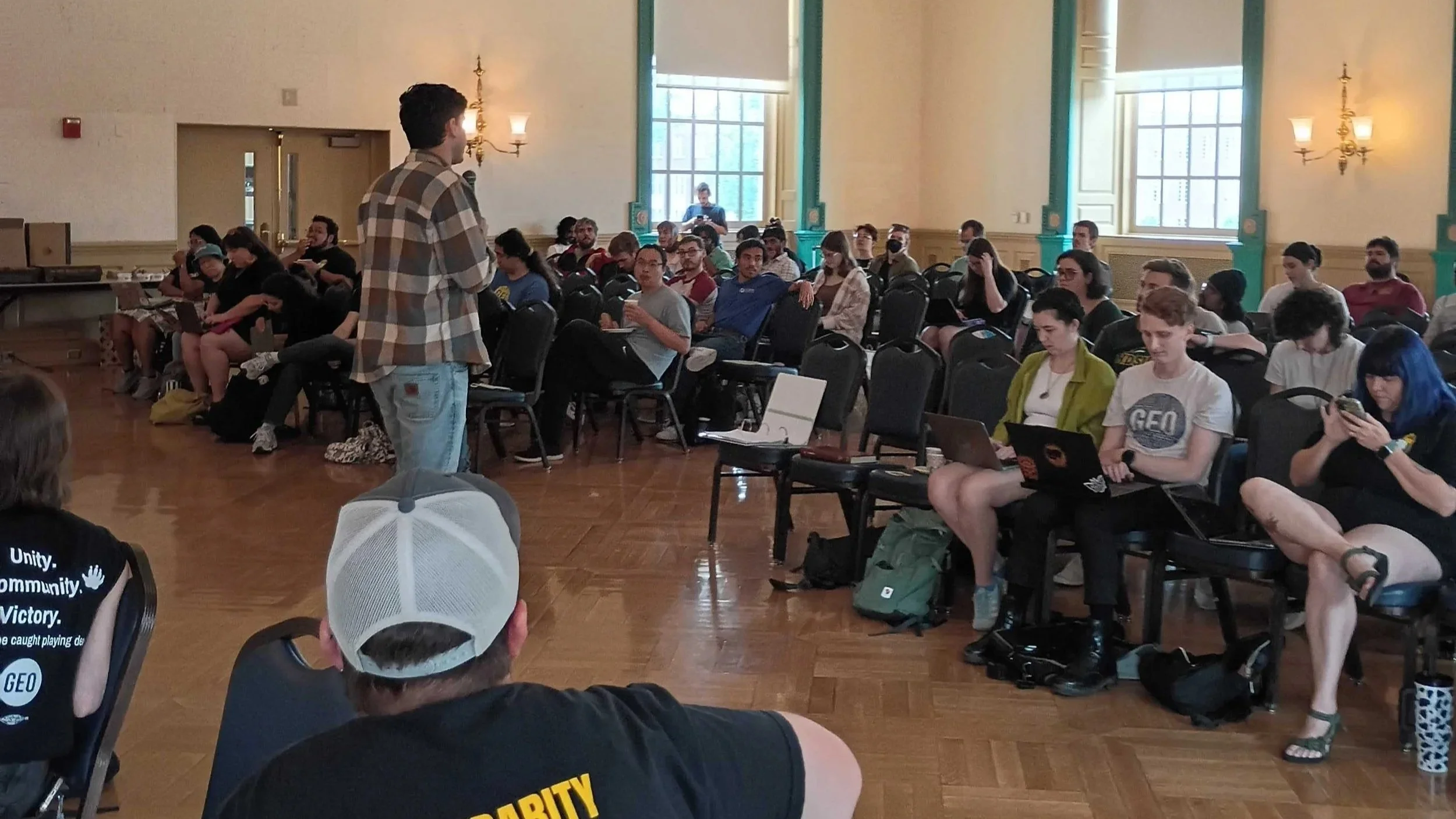
At Bargaining Session #6, the University Administration finally presented an economic proposal to the 100 members in attendance. Economic proposals cover wages, fee waivers, and benefits. (For more definitions of bargaining vocabulary, check out our Bargaining Basics page!) The GEO Bargaining Team (BT) recognizes that this proposal, which includes a 3.5% raise for the first year, is the largest initial wages proposal we’ve received from Admin. Additionally, Admin said they would explore the possibility of paying grad workers twice per month instead of once per month. Obviously, Admin is feeling pressure from how many graduate workers are attending bargaining sessions and increasing membership numbers.
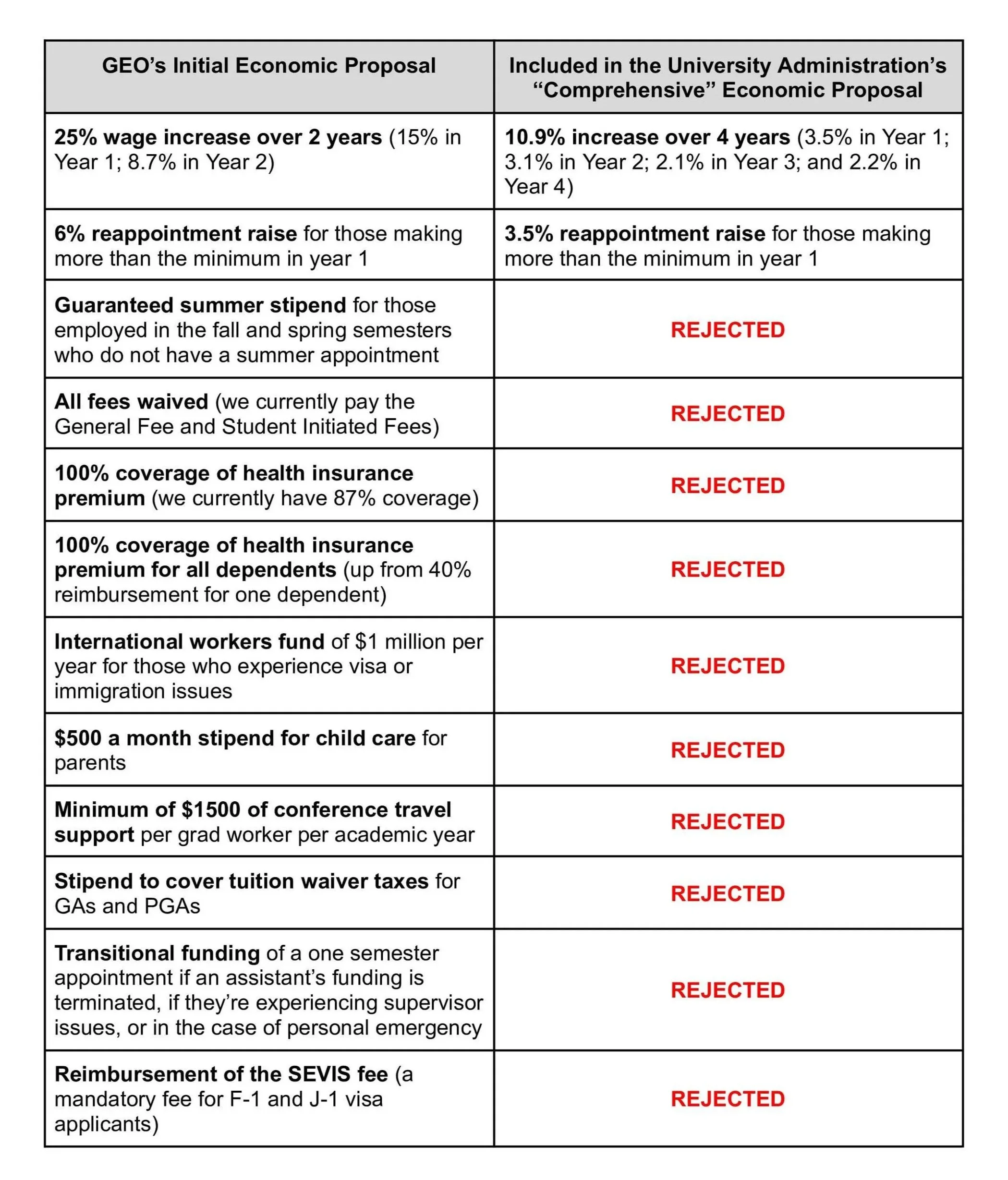
But Admin’s proposal is not enough to support grad workers’ financial well-being, especially since the inflation rate is currently 3.8%. Their wage proposal totaled 10.9% over 4 years. The increase for Year 1 would be 3.5% (minimum of $25,047/year for a 50% 9 month appointment); Year 2 would be 3% ($25,798); Year 3 would be 2% ($26,314); and Year 4 would be 2% ($26,841). They also included a 3.5% percent reappointment raise in the first year for those making more than the minimum.
This raise is especially inadequate for the close to 20% of graduate workers with only 25% FTE appointments, which represents an annual raise of only $330 after tax (that’s $27.50/month over 12 months)–which is much less than many annual rent increases in Champaign-Urbana. In addition, Admin’s proposal does not address the financial needs of grad workers without summer assistantships. One grad worker in this position shared a testimonial during bargaining, relating how they have to donate plasma twice a week to make ends meet.
The administration rejected the rest of GEO’s economic proposals outright. Our proposals include guaranteed funding during the summer, the elimination of all campus fees (such as the General Fee), a full waiver of the health insurance premium, child care coverage for parents, and more. (See the table below for more details.)
What about non-economic articles?
At the bargaining table, GEO and the administration also discussed non-economic articles (i.e. not wages, waivers, or or benefits), including Appointment Terms, Distribution of Information, Grievance Procedure, and Disciplinary Procedures. In a package proposal, Admin accepted some of GEO’s proposed language and rejected other sections.
For the article Distribution of Information, GEO proposed limits on what personal information about graduate workers—including citizenship and GEO membership status—the administration can share with third parties or government agencies without a lawful order. Admin rejected our proposal on this entirely. When our bargaining team inquired about the rejection, Admin’s lead negotiator said the subject is permissive and “I choose not to discuss it at this point.” Permissive subjects of bargaining may be discussed, but neither party is required to discuss them by law. Even though these subjects are extremely important to GEO members, the administration refused to go beyond what is required by law.
For Grievance Procedures, which describes the process for resolving violations of the contract, GEO proposed extending the time workers have to file a grievance from 25 to 30 business days. Some graduate workers, especially those who have experienced bullying by their supervisor, need additional time to feel comfortable filing a formal grievance. Admin also rejected this change, but they agreed not to share information regarding grievances with third parties, which GEO proposed to prevent gossip.
For Disciplinary Procedures, GEO proposed a new process. The current contract allows a supervisor to terminate an employee with little notice and limited due process. The new process would include a meeting that must occur prior to disciplinary action, written documentation regarding the decision of the meeting, and extended time for appeals. While Admin agreed to the meeting, they did not agree with some of GEO’s language about documentation nor our proposed appeal timeline.
At the end of the session, our lead negotiator asked GEO members if Admin’s economic proposal is enough for workers, and we heard a resounding “no.”
Bargaining is an iterative negotiation process. The contract we settle on will be somewhere between what GEO has proposed and what Admin has proposed. Where we end up will depend on members demanding better from the University—by showing up to bargaining and contributing during GEO events and meetings.
Show admin that the issues they left out matter to grad workers:
Come to Session #7 on August 6, and wear your GEO shirt (or get one at the door).
Sign up to discuss bargaining and what GEO does with new graduate students during orientations.
Attend an open committee meeting such as Solidarity Committee or Stewards Council (you don’t have to be a steward to attend!) You can view scheduled meetings on the GEO calendar on our website.